
In the fall of 2012, after reading about how Elaine Wherry set up a recruiter honeypot, we knew we had to invite her to First Round's CTO Summit to tell us all the inside story—so here goes.
In 2010, Meebo found itself in a pivotal position: For the first time, the company promised its investors it would generate significant revenue. As the team brainstormed its strategy on a quarter-by-quarter basis, they quickly realized their web JavaScript team should be doubled in Q1. But they faced a substantial obstacle. There was a dearth of JavaScript ninjas—the only type of engineers who could solve the problem of a homegrown, performance-oriented framework. Wherry tried lots of guerilla methods, but the bottom-line remained that a very limited number of people in the world had the necessary skill set, and about half were already working at the likes of Google.
To make a long story short, Wherry went on to create a false persona, Pete London, whose stacked resume was really based on Wherry’s own experiences. With a one-page website and a WordPress blog with a few JavaScript references, Pete London came to life on the web.
Nearly three years after the launch of the factious Pete London, Pete got 530 emails from 382 recruiters, from 172 organizations. He was offered seven iPads, one Xbox, one MacBook Air, five $1,000 referral cash incentives followed by two $10,000 referral cash incentives, eight coffees, seven phone calls, and six lunch invites.
This is the story of Pete London and lessons learned in recruiting.
Going Guerilla
For weeks, the internet showed Pete London’s fake profile very little love, not that he was hard to find or that he had “weak SEO,” as tens of thousands of spammers were able to locate his email address. But when Wherry launched his LinkedIn profile, traffic popped. At the time, Meebo had found a mere 5% of its engineering talent that way, so it was surprising to see so much activity.
LinkedIn is an overfished pond—focus on other areas of the internet to find the good candidates that aren’t already overwhelmed with inbound offers. Try “guerilla recruiting”—that is, everything from “JavaScript Bingo” to Google Ads to Boolean searches, GitHub, blog comments, student newspapers, Twitter keywords, meetups, Stanford CS classes, speaking events, etc. They’re essentially out of the box mechanisms to generate talent, and are really effective in finding and hiring great people.
Doppelganger!
Originally, Wherry penned her cold emails to potential JavaScript junkies, with a mindset that she was up against Amazon, Facebook, and the rest of the “ginormous” tech companies. She believed placing an emphasis on an “amazing, unique” startup experience was the most enticing way to lure people in. But the Pete London experiment proved that this approach was wrong: In fact, a whopping 85% of inbound emails were from startups—most of whom said the exact same thing (“We're a bright, wonderful culture startup, come join us").
Find a way to really differentiate yourself and make sure that you stand out—not from the Amazons, the Facebooks and the Googles, but from all of the other startups around the Web.
"Does It Work?"
Inevitably, within a startup-context, you are going to have to hire external recruiters at some point when you’re looking to scale. The good news: They can work.
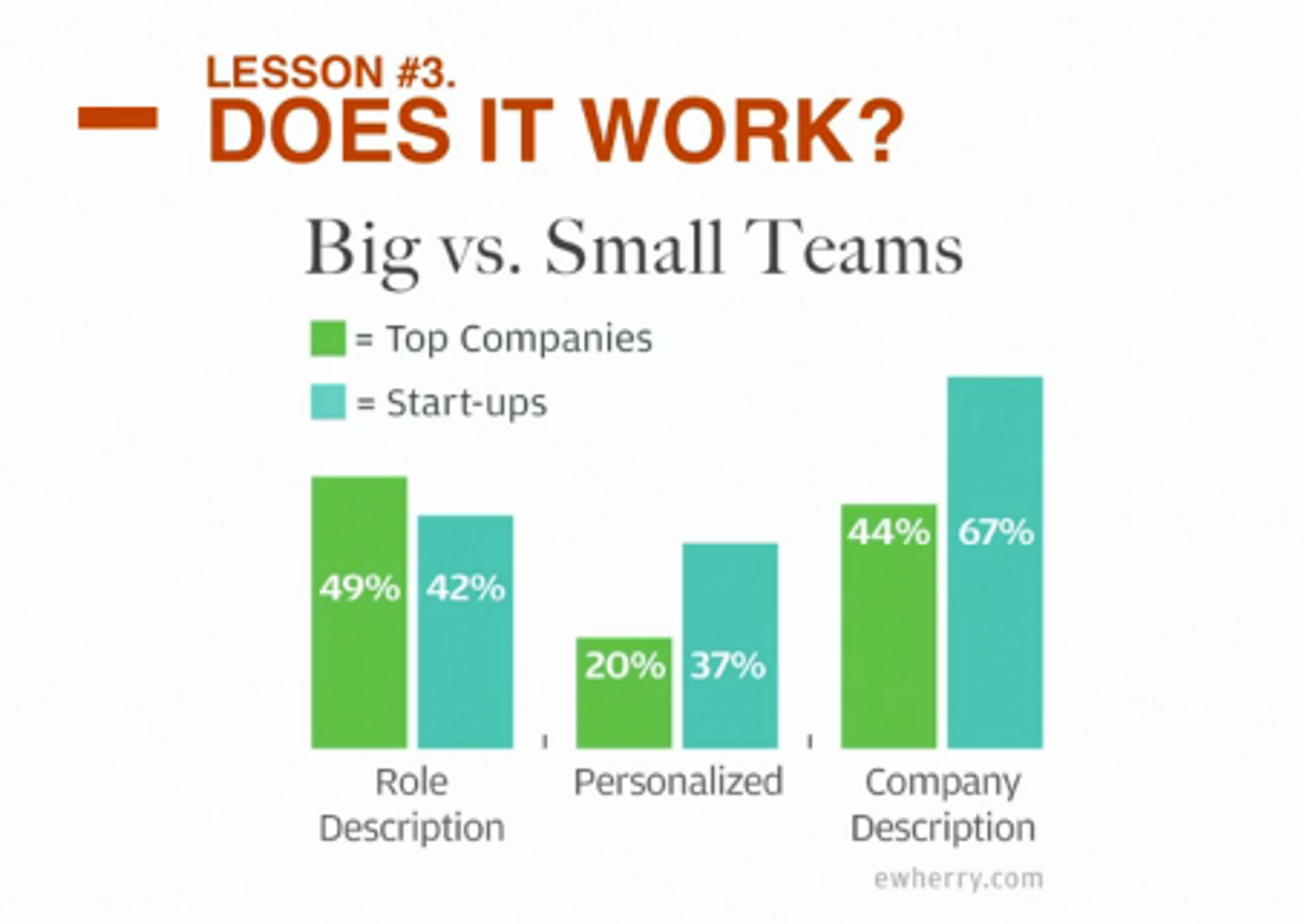
The graphic above alludes to the data—if you separate out the external recruiters for large established companies and small companies, it turns out that the external recruiters for small startups actually do a pretty good job. So until you can hire a recruiting team of your own, rest assured.
Be Very, Very Careful
The mentality that the more help you get the better (i.e. more external recruiters equals more success) is a dangerous one. Consider that when you invite external recruiters into your organization, you share with them intimate details about your company: org charts, financial data and more. This puts your company front of mind, specifically what expertise you have in-house. Accordingly, when they eventually go to another company to recruit, your startup might be their next target.
Wherry saw this firsthand at 2:20 on a May afternoon when Pete London received an email from a recruiter asking him to consider some potential job options. A mere 15 minutes later, Wherry, the engineering manager, got an email from the same person offering to help her find great talent. This external recruiter was pulling Wherry at both ends: literally saying, "Hey Pete, come out of Meebo," and then saying to the engineering manager, "Hey, let me help you find great talent."
Whenever you're working with external recruiters, ensure a "no poach" rule is clearly specified within the contract and be very specific about which external recruiters you work with.
Time for Hoodies
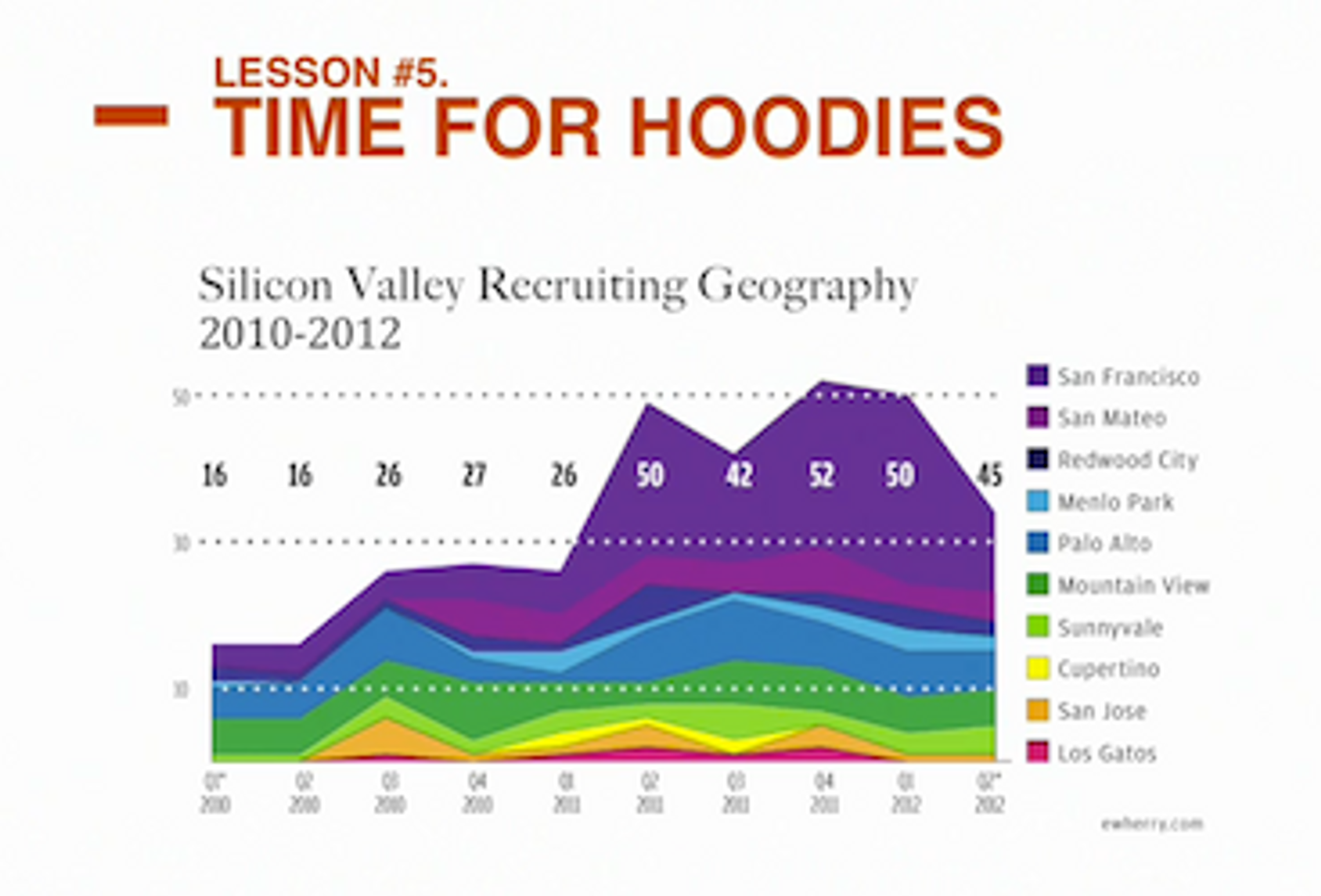
The graph above speaks for itself: Starting in 2010 through 2012, the amount of recruiting activity in San Francisco increased about tenfold.
Regardless of where you are right now, whether you're just starting to figure out where your location is or if you're an established company, your San Francisco strategy should be clearly drawn up or figured out.
Build Your Cavalry & Beat the Manager
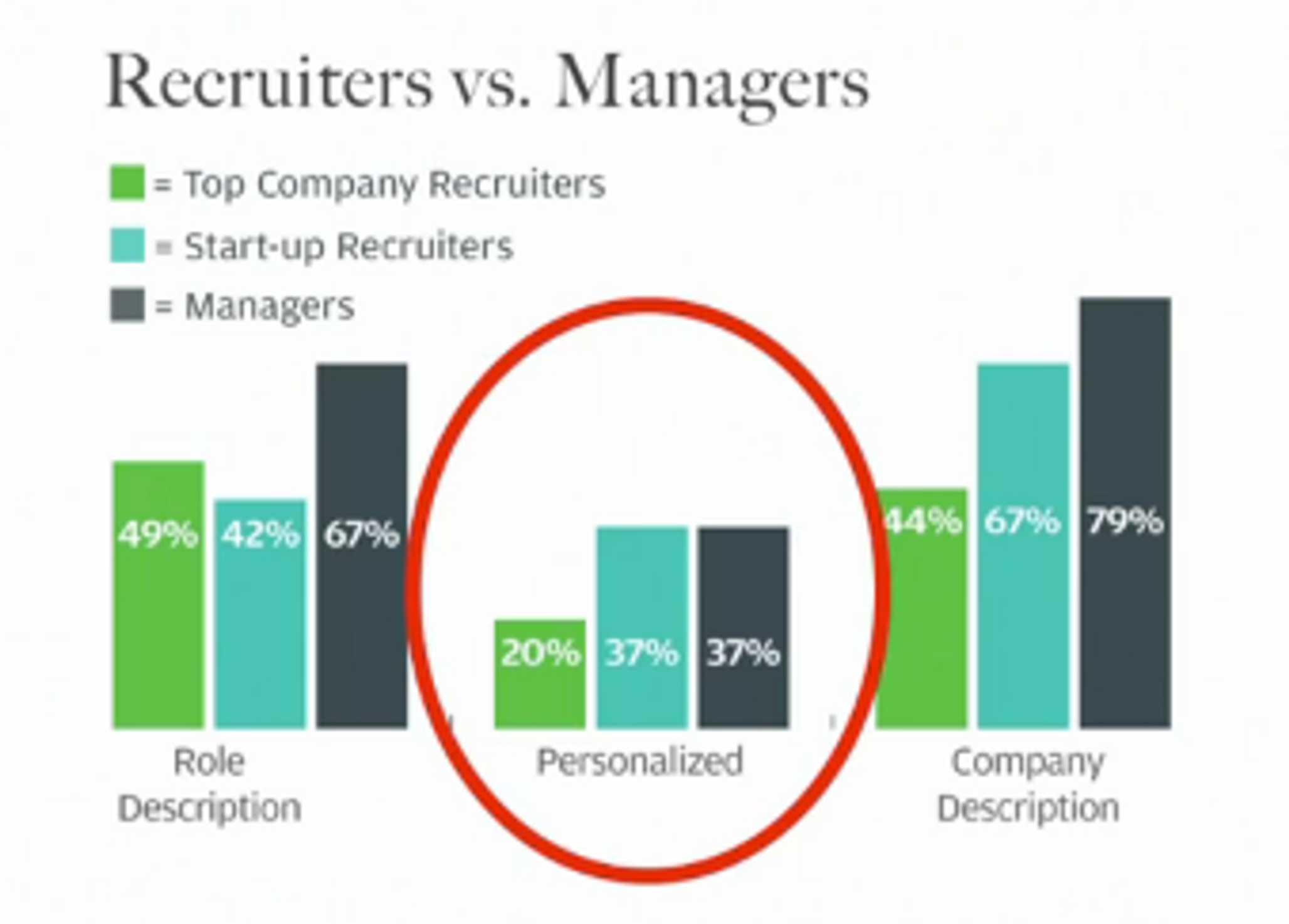
When you're working with your in-house or your external recruiters, there is the notion because they are recruiters, they should be your cavalry. They should be the people who come in and save the day and allow you to go back and spend your time doing engineering and other parts of your role. But if you look at Wherry’s data managers, they were consistently within the top 40th percentile of all recruiting activity—better than the people hired to do just that.
Ultimately, if you want to have a recruiter do a better job, ensure they include two out of three pieces of personalization.
Start On the Right Foot
Make sure you start with a pro intro, which means putting personalization up front: Rather than sticking with a bland opening, try something specific.
"Pete, I am reaching out to you given your strong front-end development experience, particularly with JavaScript. Your unique mix of front-end and back-end knowledge and experience really caught the attention of our current developer manager.”
Typical openings like “I was impressed with your profile,” “Sorry for the email,” and “Hi, my name is,” do not really help you stand out and are therefore ineffective (63% of Pete's emails looked fairly identical).
If you're feeling incredibly lazy, one way you could easily make your email better is if you look at this. After your recruiter has written that first draft, take out the first sentence. That's it. The resulting email is usually much, much better.
Follow Up, Don't Spam
Most of the emails directed to "Pete" came from an organization or came from a recruiter that he heard from previously. But a mere 12% acknowledged it was a follow-up.
Making sure your contact knows that it's your second time reaching out is critical as it helps to maintain a conversation history. As individuals, the longer the history we have with a given person, the stronger the relationship we perceive.
When you reach out to someone and say, "Hey, I wanted to see if you would be interested in this role," and then you reach out to that person again with, "Hey, I wanted to see if you would be interested in this new role. I’m really impressed with you," it implies ignored history and that the candidate is not really worth their time. The outreach immediately becomes less sincere and is interpreted as spam.
You, Your, Yours
Out of the hundreds of emails from 300+ recruiters, there were a mere five that stood out. As it turns out, however, they all shared the same thread: the use of the second person.
Instead of saying, "Hi, I’m a recruiter. We have some great positions over here. Call me," it was more along the lines of "From what I understand, you are a JavaScript expert. This would take your career more in the direction of new media content, and I would love to learn more about you and your interests."
Do Not Do What I Did
The reason that Wherry got into this predicament in the first place was because these JavaScript experts were so hard to find. In a nutshell, don’t do this!
Outside of finding good recruiters, employing the right sourcing techniques, beating a hiring crunch involves hiring more managers, and specifically managers who can help recruit. Their networks and expertise in reaching people in non-traditional ways will be beneficial, as opposed to bringing on individual contributors in a non-methodical fashion.
A Final Rule of Thumb
Solving the hiring crisis is a lot like any other engineering problem: You break down each piece of the process and you say, "Where are we losing people within our funnel?"
A good rule of thumb is to double check. Generally, your recruiter should be getting about a 12 to 20% response rate from cold outreach. That is just a good rule of thumb, so double check.